
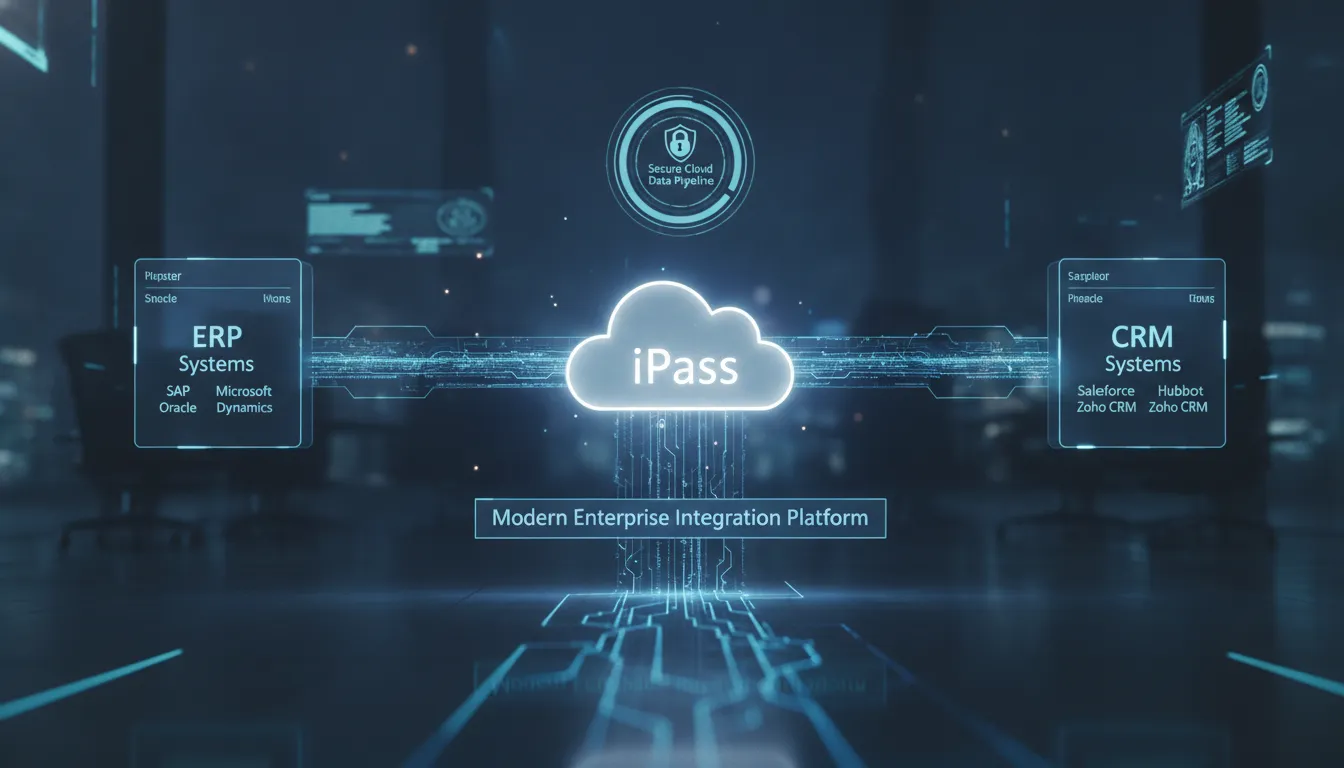
Enterprise integration has evolved from a back-office IT concern into a boardroom strategic priority. CFOs and CTOs overseeing complex technology stacks face mounting pressure to eliminate data silos, reduce operational costs, and accelerate time-to-value from their software investments. Integration Platform as a Service (iPaaS) has emerged as the architecture of choice for organizations that demand unified data flows across ERP, CRM, and specialized business applications without the perpetual drag of custom point-to-point code.
iPaaS business benefits center on replacing fragmented manual processes with a governed, cloud-native integration layer that connects enterprise applications into a single operational fabric. For CFOs, this translates to a trustworthy single source of truth for financial reporting, faster month-end closes, and measurable reductions in reconciliation labor. For CTOs, it means lower technical debt, reduced maintenance overhead, and the ability to onboard new applications in days rather than weeks. According to Gartner, iPaaS adoption has accelerated as enterprises seek to unify hybrid and multi-cloud environments without escalating integration maintenance costs.
Get a free iPaaS assessment. Contact Streams Solutions to evaluate your current integration architecture and identify quick-win automation opportunities.
What Is iPaaS and Why Should Business Leaders Care?
Integration Platform as a Service (iPaaS) is a cloud-based suite of tools that enables organizations to connect diverse software applications. Data sources, and business processes through a centralized management hub. Rather than building custom scripts for each system-to-system link, iPaaS provides pre-built connectors, low-code workflow designers. And centralized monitoring that dramatically reduces the time and skill required to maintain enterprise integrations.
Solving the data silo problem at enterprise scale
Data silos remain the single largest drag on enterprise analytics accuracy. When financial data resides in the ERP, customer data in the CRM. And operational data in a warehouse management system, executives cannot produce a reliable consolidated view without significant manual reconciliation. An iPaaS platform directly addresses this by serving as a persistent, governed bridge between every system in the technology stack. For CFOs, this eliminates the uncertainty that plagues monthly reporting cycles. According to McKinsey, organizations that implement centralized integration platforms report 25-35% faster financial close cycles and measurable improvements in data accuracy.
Strategic benefits for technology leaders
For CTOs and CIOs, the imperative extends beyond data consolidation. Custom integration code accumulates technical debt with every API version change, every platform upgrade, and every new application added to the stack. iPaaS platforms such as Dell Boomi. Celigo, and Workato offer low-code integration designers that allow teams to build and modify connections without deep engineering expertise. Boomi’s own research indicates that organizations using iPaaS reduce integration development cycles by 60-80% compared to traditional custom coding approaches. Streams Solutions brings certified expertise across all three major iPaaS platforms, complemented by proprietary accelerators for Salesforce-NetSuite. HR Payroll, and Shopify-NetSuite integrations that cut deployment timelines by an additional 40-60%.
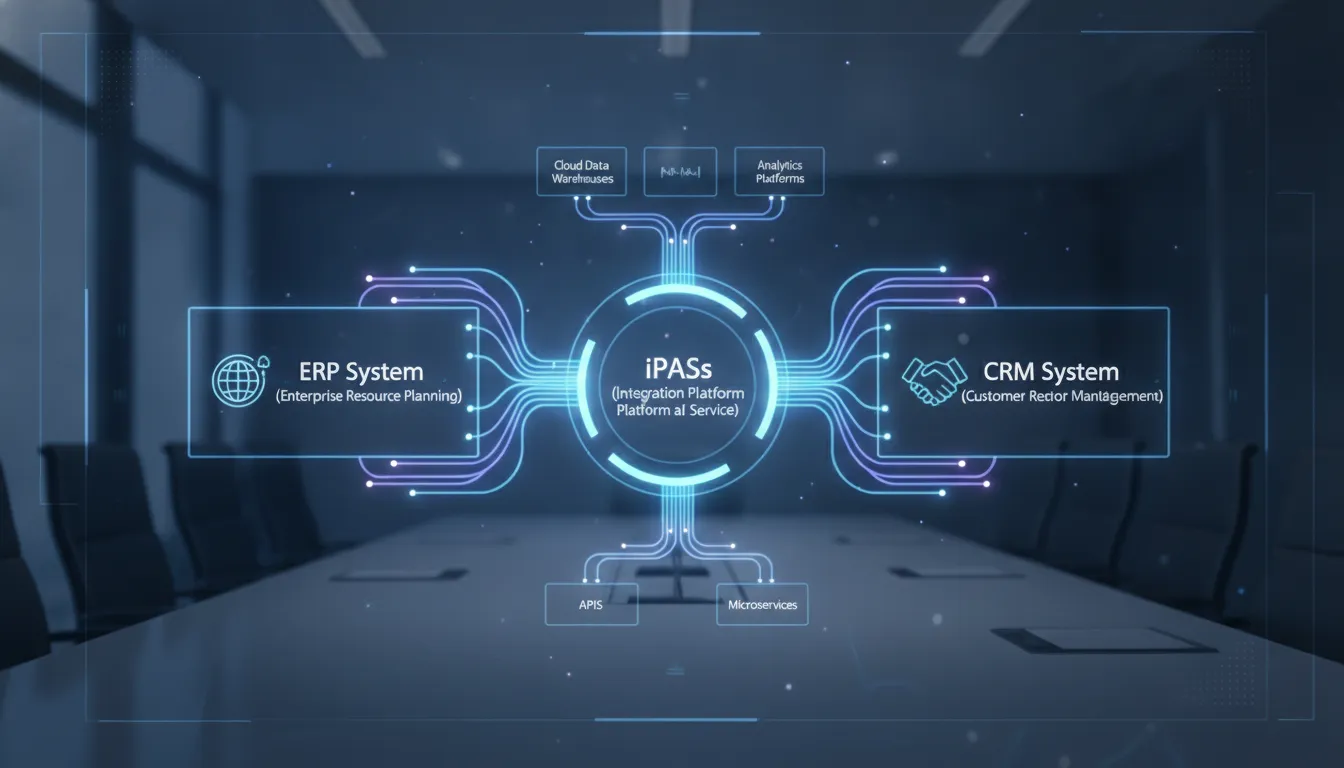
What Specific iPaaS Business Benefits Should CFOs Prioritize?
CFOs evaluating iPaaS should prioritize four measurable outcomes: unified financial data eliminating reconciliation overhead. Reduced total cost of ownership compared to custom integrations, accelerated time-to-value from new system deployments, and enhanced audit readiness through governed data flows. Each of these benefits directly impacts the metrics that matter most to financial leadership.
Unified financial data and faster closes
Modern finance leaders require real-time visibility into cash positions, revenue recognition status, and operational costs. When ERP, billing, and CRM systems operate in isolation. Producing a consolidated financial statement demands significant manual effort from the accounting team. iPaaS eliminates this friction by synchronizing master data and transaction records across every system in the finance ecosystem. By implementing an Oracle NetSuite-centric iPaaS architecture, finance teams can reduce month-end close time from two weeks to three days, freeing senior analysts for strategic work rather than data reconciliation.
Measurable ROI and revenue acceleration
The business case for iPaaS rests on hard financial returns. Organizations that deploy a governed integration layer typically see three categories of measurable ROI: direct labor savings from eliminated manual data entry and reconciliation. Reduced integration maintenance costs by replacing custom code with managed connectors, and revenue acceleration through faster system deployment cycles. Streams Solutions clients have realized incremental revenue growth averaging $3.4M following integration architecture modernization. Driven by improved data visibility that enables faster identification of revenue opportunities and more responsive customer operations. Forrester notes that companies with mature integration practices achieve 40% faster deployment of new business capabilities.
Continuity, compliance, and analytics readiness
Data governance requirements under ASC 606, SOX, and GDPR demand that finance leaders maintain complete visibility into how data moves between systems. iPaaS platforms provide audit trails. Error handling, and data transformation logging that traditional point-to-point integrations cannot match. This governance infrastructure directly supports more reliable analytics, faster audit preparation, and stronger internal controls. Organizations using iPaaS for scalable NetSuite integration architecture report audit completion times reduced by 30-50% because every data transformation and transfer is documented within the platform.
How Does iPaaS Drive Operational Agility for Tech Leaders?
For CTOs and CIOs, iPaaS delivers operational agility through three mechanisms: reduced integration cycle times from weeks to days. Centralized governance that prevents shadow IT from creating unmanageable point-to-point connections, and elastic scalability that accommodates business growth without architectural redesign.
Accelerating delivery cycles
A single custom integration between two enterprise applications typically requires 4-6 weeks of engineering time. Followed by ongoing maintenance that consumes 15-20% of a developer’s annual capacity. iPaaS platforms change this calculus entirely. Pre-built connectors for commonly used enterprise applications eliminate the need to write boilerplate API integration code. While low-code workflow designers allow business analysts to build and test connections without engineering dependency. Workato’s enterprise data suggests that organizations using iPaaS reduce integration delivery times by an average of 70%, enabling technology teams to support more business initiatives with the same headcount.
Scaling without architectural friction
As organizations grow through acquisition or organic expansion, the number of interconnected applications multiplies. Traditional point-to-point integration models break under this complexity, creating a brittle web of dependencies that engineers call spaghetti architecture. An iPaaS platform provides a hub-and-spoke model where every connection is centrally managed, monitored, and documented. Streams Solutions has helped mid-market enterprises scale from 5 integrated systems to 25+ without requiring additional integration engineering staff, using platforms like Salesforce integration architecture governed through a single iPaaS control plane.
Reducing technical debt accumulation
Technical debt from custom integration code represents one of the largest hidden costs in enterprise IT. Each custom integration requires ongoing testing, documentation, and maintenance that consumes engineering capacity. When applications upgrade their APIs. Every affected custom integration must be rewritten. iPaaS platforms eliminate this cycle by abstracting the underlying API complexity behind managed connectors that are updated by the platform vendor. Over a three-year horizon, Gartner estimates that iPaaS-based integration strategies reduce total integration ownership costs by 40-60% compared to maintaining custom integration code.
Comparing iPaaS vs. Custom Integrations: Which Strategy Delivers Better ROI?
While custom integrations offer maximum flexibility for unique requirements, iPaaS solutions deliver lower total cost of ownership. Faster implementation, and easier scalability for the vast majority of enterprise integration scenarios. The decision hinges on integration complexity, in-house engineering resources, and long-term maintenance cost tolerance.
| Factor | Custom Integration | iPaaS Solution |
|---|---|---|
| Initial Build Time | 4-6 weeks per connection | Days to 2 weeks |
| Annual Maintenance Burden | 15-20% of developer FTE per integration | Platform subscription, vendor-managed |
| Scalability Ceiling | Hard limit at 10-15 connections before spaghetti code emerges | Elastic, tested at 50+ connections |
| Security Compliance | Variable, team-dependent implementation | SOC 2, HIPAA, GDPR built into platform |
| Total 3-Year Cost of Ownership | $120K-$250K per integration | $30K-$80K annual platform subscription |
| Time to Value | 6-12 weeks from inception to production | 2-4 weeks with pre-built connectors |
When custom integration still makes sense
Custom development remains appropriate for highly specialized scenarios: proprietary systems with no pre-built connector available. Integrations requiring ultra-low latency measured in microseconds, or connections that must operate in completely air-gapped environments. For the remaining 85-90% of enterprise integration use cases, iPaaS delivers superior economics and operational outcomes. Understanding the different types of iPaaS platforms helps organizations match capability to use case.
Security and governance comparison
Modern iPaaS platforms ship with enterprise-grade security controls including field-level encryption, role-based access, full audit logging, and SOC 2 Type II compliance certifications. Building equivalent security into custom integrations requires dedicated security engineering resources that most mid-market teams cannot justify. For finance organizations handling sensitive financial data, the built-in governance capabilities of platforms like Boomi and Celigo often tip the decision toward iPaaS adoption.
Key Platforms Powering Enterprise iPaaS Strategies
Three platforms dominate the enterprise iPaaS landscape: Dell Boomi for complex, large-scale deployments; Workato for user-led automation; and Celigo for mid-market ERP-centric integration. Each platform has distinct strengths, and the optimal choice depends on organizational maturity, existing systems, and integration complexity.
Dell Boomi for complex enterprise architecture
Dell Boomi holds the strongest position for large enterprises with hybrid cloud environments, complex integration requirements, and established governance frameworks. As a Global Certified System Integrator for Boomi, Streams Solutions has deployed Boomi AtomSphere environments managing thousands of integrations across financial services, healthcare, and manufacturing clients. Boomi’s strength lies in its enterprise connectors, robust error handling, and AtomSphere platform that supports complex data mapping and transformation at scale.
Workato and Celigo for speed and mid-market fit
Workato differentiates through its recipe-based automation model that enables business users to build integrations with minimal IT involvement. Its enterprise-grade security and extensive application connector library make it suitable for organizations that want to distribute integration ownership across business units. Celigo, meanwhile, specializes in ERP-centric integration, with particularly strong connectors for NetSuite and Salesforce. Mid-market organizations running NetSuite as their core ERP frequently choose Celigo for its pre-built integration templates and predictable subscription pricing.
Choosing your strategic path
The right platform decision depends on factors including existing system landscape, in-house technical capability, integration volume, and growth trajectory. Streams Solutions maintains certified partnerships across all three platforms and provides vendor-neutral advisory services to help organizations select the right fit rather than pushing a single solution. Schedule a platform evaluation to determine which iPaaS architecture best supports your integration requirements.
Implementing an iPaaS Strategy: A 5-Step Roadmap for Decision Makers
Successful iPaaS implementation follows a structured five-phase approach: discovery and assessment, objective setting, platform selection, phased deployment with quick wins, and ongoing governance establishment. Each phase builds on the previous one to ensure measurable business value at every milestone.
Phase 1: Assess your current integration landscape
Begin by documenting every system-to-system connection in your current environment, including the data volume, frequency, and business criticality of each integration. Identify manual data transfer processes that represent immediate automation candidates. Most organizations discover 30-50% more integration points than they initially estimated, including shadow IT connections built outside the IT department’s awareness.
Phase 2: Define measurable objectives
Establish specific, quantifiable targets for the iPaaS initiative. Typical objectives include reducing month-end close time by a specific percentage. Eliminating a defined number of manual reconciliation hours per month, or achieving a certain reduction in integration-related incidents. Clear metrics ensure the project delivers measurable business value rather than becoming a technology exercise.
Phase 3: Select the right platform
Evaluate platforms against your specific requirements: application connectors needed, data transformation complexity, security and compliance requirements, and in-house technical capability for ongoing management. Streams Solutions’ integration and data services include platform evaluation workshops that help organizations make selection decisions based on objective criteria rather than vendor marketing.
Phase 4: Deploy in phases starting with quick wins
Begin with the highest-value, lowest-complexity integration to demonstrate value quickly. A common starting point is synchronizing customer master data between CRM and ERP. Which typically eliminates hours of manual data entry per week while building confidence in the platform. Each subsequent phase tackles more complex integration scenarios using patterns validated in earlier phases.
- Quick-win phase: Customer and product master data synchronization (2-3 weeks)
- Process automation: Order-to-cash and procure-to-pay automation (4-6 weeks)
- Analytics enablement: Real-time data pipeline for BI and reporting (3-4 weeks)
- Scale and optimize: Extend platform to additional systems and business units (ongoing)
Phase 5: Establish ongoing governance
Implement monitoring, alerting, and change management processes to ensure the iPaaS platform remains reliable as it scales. Define ownership boundaries between business units and IT, establish connection request and approval workflows, and schedule regular platform health reviews. The StreamsWay methodology provides a proven governance framework with four tiers of support from technical advisory through fully managed operations.

Frequently Asked Questions
What are the primary business benefits of iPaaS?
The primary iPaaS business benefits include unified data across enterprise systems eliminating manual reconciliation, reduced integration maintenance costs compared to custom code. Faster deployment of new applications and business capabilities, improved data quality and audit readiness, and enhanced business agility through scalable integration architecture. Organizations implementing iPaaS typically see 25-35% faster financial close cycles and 40-60% lower integration ownership costs over three years.
What is the strategic value of iPaaS for CFOs?
For CFOs, iPaaS delivers a single source of truth for financial data by synchronizing ERP, CRM, billing, and operational systems in real time. This eliminates the manual reconciliation that delays financial reporting and introduces data accuracy risk. CFOs gain faster visibility into cash positions, revenue recognition status, and operational costs, enabling more confident strategic decisions and faster audit cycles.
How does iPaaS differ from custom integration methods?
Custom integration requires dedicated engineering resources for each system-to-system connection. With initial build times of 4-6 weeks and ongoing maintenance consuming 15-20% of developer capacity per integration. iPaaS replaces custom code with pre-built connectors. Low-code workflow designers, and vendor-managed platform updates, reducing build times to days and eliminating per-integration maintenance overhead.
Why is iPaaS a strategic investment for technology leaders?
CTOs and CIOs invest in iPaaS to reduce technical debt accumulation, centralize integration governance, and enable faster response to business requirements. By replacing fragile point-to-point connections with a managed integration layer. Technology leaders can support 3-5x more business initiatives with the same engineering headcount while maintaining stronger security and compliance posture.
How long does an iPaaS implementation typically take?
A phased iPaaS implementation typically delivers the first production integration within 2-4 weeks. With full enterprise deployment spanning 3-6 months depending on the number of systems and integration complexity. Streams Solutions’ phased approach prioritizes quick wins that demonstrate value within the first 30 days, building organizational confidence for subsequent phases.
Ready to Unlock the iPaaS Business Benefits Your Enterprise Needs?
Disconnected systems are not just an IT inconvenience. They are a direct drag on financial accuracy, operational speed, and competitive agility. Every month of delay means more manual reconciliation hours, more data errors, and more technical debt accumulating in your integration architecture. The organizations that act decisively on integration modernization gain a measurable advantage in reporting speed, cost efficiency, and the ability to deploy new capabilities ahead of their competition.
Schedule a free integration assessment. Reach out to Streams Solutions or call (703) 718-5577 to discuss your integration challenges and learn how a strategic iPaaS deployment can transform your enterprise data architecture.