
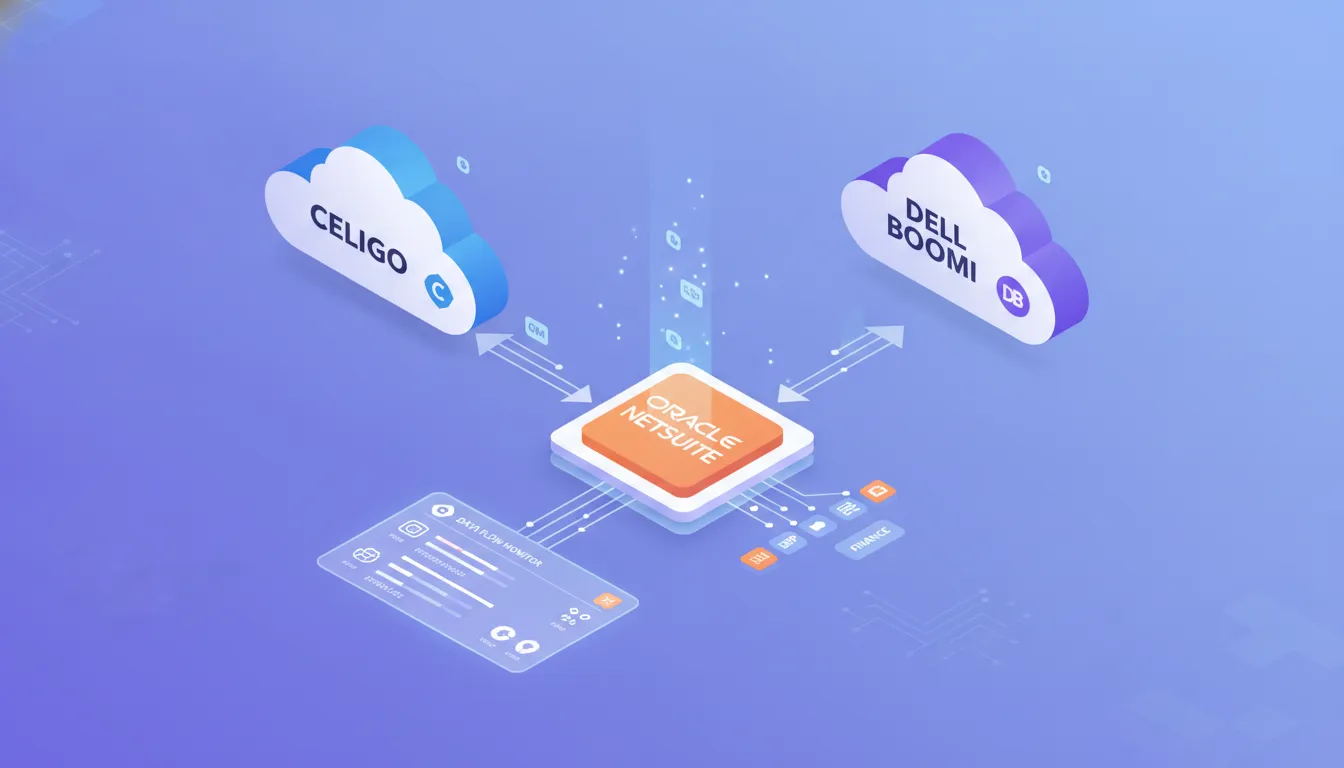
Poor data syncs between NetSuite and your other apps can stall growth in a matter of weeks. When automation breaks, manual work takes over and errors multiply across your ledger. You need a reliable bridge that fits your team’s technical skills.
Schedule a free NetSuite integration consultation with Streams Solutions today.
When evaluating Celigo vs Boomi NetSuite, the right choice depends on your team’s technical skill and the complexity of your business tasks. Celigo is a modern, easy to use platform built for hybrid teams, allowing both IT and business staff to manage automated tasks with confidence. It features AI-powered error handling that resolves up to 95% of integration issues automatically. This makes it ideal for fast-growing mid-market firms.
Choosing the right tool is the first step toward a connected business that scales without trouble. Before you can decide which platform fits your specific needs, you must grasp how these tools work with your ERP. This starts with Understanding NetSuite Integration.
Understanding NetSuite Integration: Why Celigo and Boomi Lead the Pack
A NetSuite integration strategy must align your ERP with external CRM, e-commerce, and HR systems to prevent operational silos. Celigo and Boomi lead the market by offering robust iPaaS solutions. These platforms automate complex data pipelines and reduce manual errors while improving organization-wide visibility.
Connecting your ERP to other systems is a key part of growth. For most firms, a central hub like NetSuite must talk to CRM, HR, and sales tools. This link ensures data stays the same across your whole company.
Most mid-market and large businesses use an Integration Platform as a Service (iPaaS). These tools act as a bridge between cloud apps. Among many choices, Celigo and Boomi stand out as the top two.
The power of choice in iPaaS
Boomi and Celigo are both top tools, but they have different goals. Boomi has been a leader for 10 years in a row according to top analysts. It offers a full set of tools for big firms with large IT staffs.
Celigo takes a different path by focusing on ease of use. It is built for teams that mix IT experts with business users. This platform is powerful enough for complex jobs but simple enough for other teams to use with trust.
Finding the right partner for your team
Picking a tool is only the first step. You also need a plan to set it up right. Successful ERP projects rely on matching your tools with your management goals .
We use a special method to help our clients succeed. Our team uses expert Celigo integration services and Boomi skills to bridge the gap between complex tools and real results. For a deeper comparison of how Celigo and Boomi specifically handle NetSuite integration workflows and pre-built connectors, see our dedicated comparison. We also use our own tools to help you get live faster.
To establish a robust NetSuite integration, we recommend following these structured implementation phases.
- System Inventory and API Audit: Map every application, data field, and custom record that must communicate with NetSuite.
- The iPaaS Platform Selection: Align your team’s technical capabilities and budget with either Celigo’s low-code model or Boomi’s custom developer canvas.
- Data Ownership and Governance Setup: Define the master source of truth for critical customer, order, and inventory records.
- Accelerated Blueprinting and Deployment: Utilize pre-built templates and proprietary accelerators to configure flows, test data loads, and go live.
Ease of Use and UI: No-Code Simplicity vs. Developer-Centric Control
Celigo provides a highly intuitive, SaaS-first visual interface that empowers both business users and IT staff to build and manage integrations. In contrast, Dell Boomi offers a developer-centric canvas for deep control over complex data transformations. This requires specialized technical expertise to implement and maintain effectively.
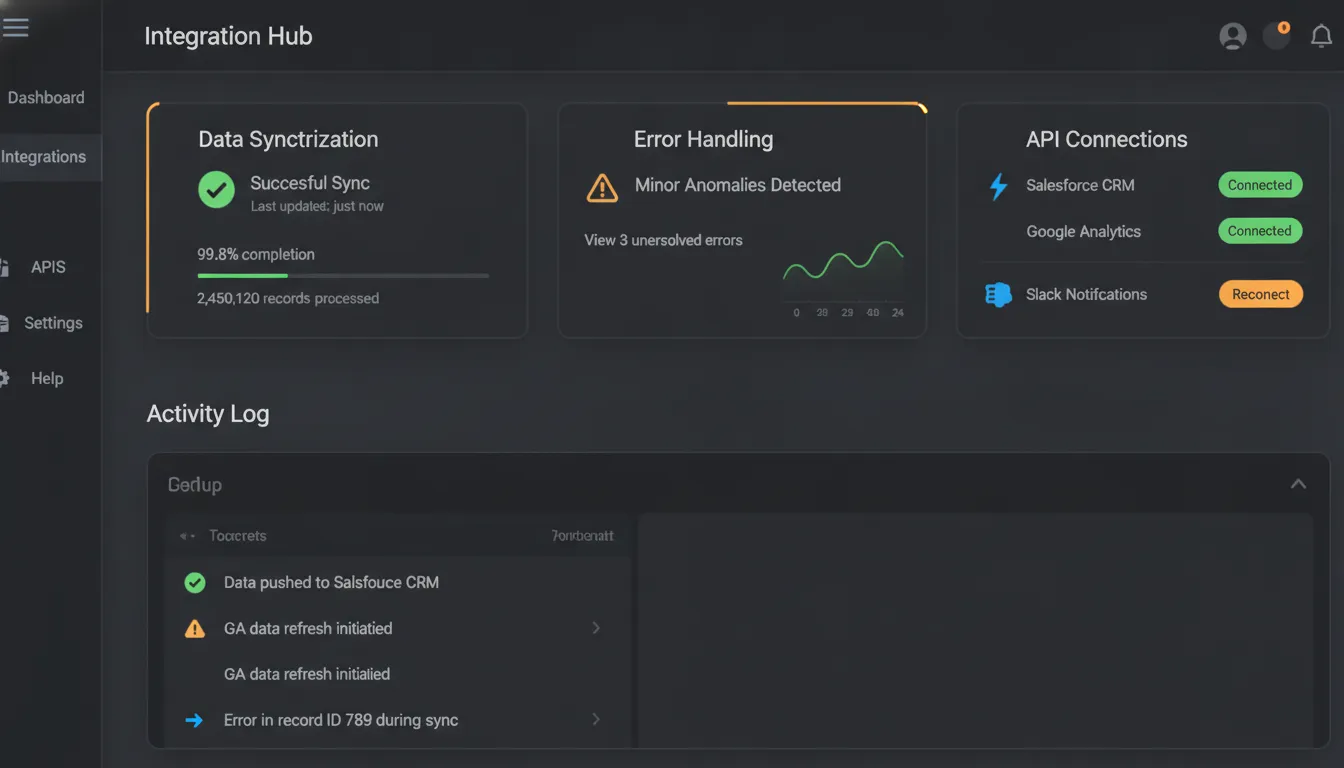
The screen and tools of an integration platform show who can manage your business workflows. When comparing Celigo vs Boomi NetSuite options, the choice often comes down to who will do the work. One platform targets business users with a visual approach. The other offers deep control for tech teams. An efficient integration architecture is needed to keep data steady across many different apps. Your choice will change how your staff works every day.
No-code tools for business teams
Celigo uses a SaaS-first design that helps teams. These groups often include both IT staff and business leaders. Its tool is clear and easy to use. This helps teams build and manage tasks with trust. For example, Celigo uses AI to help find and fix errors. This system can fix up to 95% of common integration issues without a developer.
This no-code approach is helpful for mid-market firms. These companies may not have large IT teams. By using expert Celigo integration services , firms can set up tools quickly. Leaders in manufacturing and tech benefit most from these connected systems. Simple tools help teams adapt to new business needs without waiting for technical help.
Powerful controls for skilled developers
Boomi takes a different path with its developer-centric model. It was built over twenty years ago when IT led all integration work. Its power lies in its deep control and large company features. Big firms with many IT staff often like Boomi for this reason. It offers robust tools for data management and complex security needs.
While Boomi is powerful, it has a steeper learning curve. Users need technical skills to get the most out of its features. This platform is an industry leader and provides many security certificates. But its hard design can slow down smaller teams. Successful ERP implementation in SMEs relies on careful planning and clear management. If your team lacks deep coding skills, Boomi may feel hard to use.
Choosing the right fit for your staff
The best tool for your firm depends on your staff skills. You must align your integration tools with your business goals. Large firms might need the deep control Boomi offers. But mid-market firms often find that Celigo fits their needs better. It lets more people join in the integration process.
Streams Solutions is a certified partner for both platforms. We use a “no surprises” method to help you pick the right fit. Our team can guide you through a NetSuite integration guide to find the best path. We focus on bridging the gap between complex systems and real results. Whether you need no-code ease or developer control, we help you get value from your tools.
Should You Choose Pre-Built Connectors or Custom NetSuite Customization?
Mid-market organizations must choose between Celigo’s pre-built Integration Apps, which offer plug-and-play functionality for popular applications, and Boomi’s customizable connectors. Pre-built connectors accelerate time-to-value, while custom development offers infinite flexibility for bespoke or legacy enterprise applications.
The choice in the Celigo vs Boomi NetSuite debate often comes down to how you want to build. Celigo is known for its pre-built tools. These templates help you link NetSuite with major apps like Salesforce, Shopify, or HubSpot in just a few clicks. For businesses using Salesforce alongside NetSuite, our Salesforce implementation and integration services ensure seamless data flow between CRM and ERP. This is ideal when you need to start fast and avoid custom code.
The benefit of pre-built templates
Pre-built tools help teams avoid the hard parts of coding from scratch. When you use Celigo for NetSuite integrations , you get access to pre-mapped flows. These flows handle common tasks like inventory updates and order syncs automatically. This saves time and cuts down on errors that can occur during manual setup.
Using pre-built tools also helps with cross-team work. Celigo’s platform is easy for many people to use, not just coders. This helps teams manage their own tasks and keeps projects moving. When ERP projects fail , it is often due to poor adoption. A tool that more people can use helps prevent this issue.
When you need custom links
While pre-built tools are great, some firms need custom links. If you use rare software, you may need to build custom connectors. Both Celigo and Boomi let you build custom links. But they do so in different ways.
Boomi excels in building custom connections for large systems. It gives developers total control over how data moves. If you have unique business rules, Boomi’s custom tools are very powerful. However, setting them up takes more time and specialized IT skills. For less complex needs, custom connector development with Celigo offers a simpler path that still provides great flexibility.
Scalability and Architecture: Mid-Market Agility vs. Enterprise Complexity
Celigo’s architecture excels at providing agility for fast-growing mid-market firms with hybrid business-IT teams. Boomi’s robust enterprise architecture supports massive data volumes, private cloud deployments, and multi-tenant management, making it the preferred choice for complex global enterprises with dedicated IT resources.
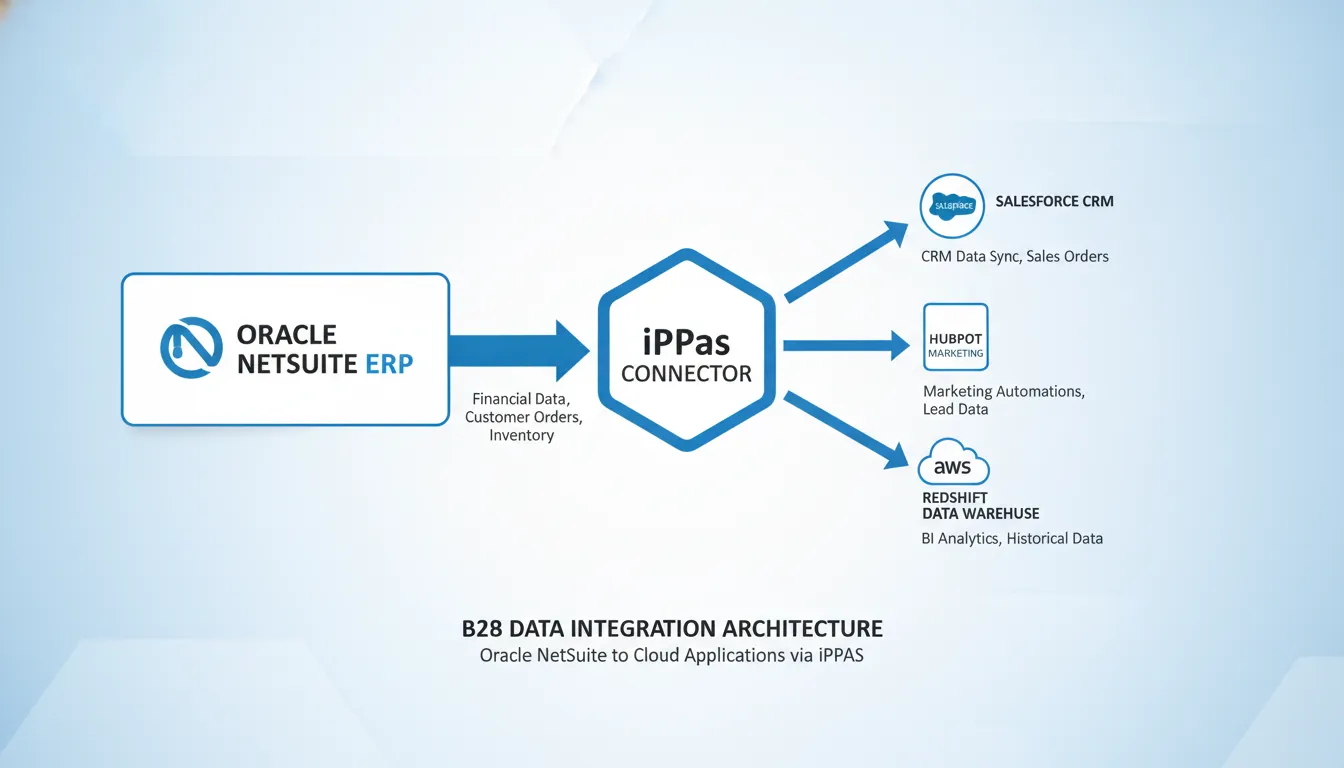
Choosing between Celigo and Boomi for NetSuite often depends on your current size and growth plans. Both platforms offer strong scaling tools. But they are built for different types of growth. One is designed for quick changes in mid-market teams. The other is built to handle the complex architectures of global firms.
Mid-market speed and agility
Celigo is built for the modern hybrid team. It is strong enough for big tasks but easy enough for business teams to use with trust. This model is perfect for fast-growing firms that need to adapt quickly. It lets you add new apps and automate workflows without a massive IT team. This focus on agility is a key part of a smart integration strategy .
The focus here is on speed and ease. When a firm adds new tools, they need an architecture that fits right in. Celigo uses a hub-and-spoke model. This keeps all links central and easy to see. It helps you avoid a messy web of code and ensures better alignment between integration strategy and business performance . This path helps your business scale smoothly.
Enterprise-grade scaling with Boomi
Boomi shines in complex enterprise settings. Its architecture is built to handle huge data loads. It uses a tool called the “Atom” to run integrations. Atoms are small, lightweight runtimes that can be placed anywhere. This lets big firms run links on-premise, in the cloud, or in a hybrid setup.
This distributed architecture is very strong. It helps firms keep control of their data and meet tough safety rules. Big firms with complex IT setups often need this level of control. For organizations scaling beyond NetSuite toward a multi-ERP strategy, Streams provides Microsoft Dynamics 365 integration and consulting to support enterprise growth. But for mid-market teams, managing this architecture can be a burden. It needs constant care and specialized IT skills to keep running well.
Book a technical discovery call with our certified NetSuite integration architects.
Celigo vs Boomi NetSuite: Platform Comparison and Feature Overview
Comparing Celigo vs Boomi NetSuite reveals distinct approaches to platform capability. Celigo excels in rapid deployment, intuitive error resolution, and user accessibility. Boomi shines in robust API management and distributed execution via Atoms. It also provides comprehensive master data governance for complex enterprise ecosystems.
When you look at Celigo vs Boomi NetSuite tools, you see two great ways to link your cloud apps. But they each have their own pros and cons. Understanding these differences is vital for choosing the right path for your firm’s growth.
This guide helps you see which tool is best for your unique goals and budget. Many business leaders face hard choices when they build an integration architecture . Comparing the main features side-by-side helps make this choice clear.
Key features at a glance
Celigo is built for teams that need to move fast with less tech help. It uses a visual style to help people build tasks. It also features pre-built templates for major apps. This platform is a great fit for mid-market firms that want to automate their business quickly.
Boomi offers deep control for complex enterprise tasks. It has robust tools for API management and data quality. It is built for large firms with complex IT needs. Such environments require dedicated developer teams.
The table below shows the key differences between these two platforms.
| Feature. | Celigo (integrator.io). | Dell Boomi. |
|---|---|---|
| Target Audience. | Hybrid teams (IT & Business). | Professional Developers & IT. |
| Setup Speed. | Rapid (days to weeks). | Moderate (weeks to months). |
| Key Advantage. | Pre-built Integration Apps. | Deep control & customization. |
| Error Handling. | AI-assisted self-healing. | Manual log analysis. |
| Best For. | Mid-market agility. | Enterprise scale. |
Choosing the right platform is more than just picking features. It is about aligning your tools with your broad business strategy. A strong plan connects your systems to drive business value. Our team can help you build scalable NetSuite-centric integrations that support your long-term plans.
How Do Celigo and Boomi Pricing Models Compare?
Celigo features a highly predictable tier-based subscription model based on the number of endpoints and active flows. Boomi employs a usage-based or connection-based pricing model that scales with data volume and integration endpoints, which can become costly without proactive governance.
Choosing between Celigo and Boomi often comes down to how you pay for your tech stack. Both tools use a monthly fee, but they count their costs in different ways. Knowing these details helps you plan your budget and avoid sudden cost spikes as you grow.
Predictable tiers with Celigo
Celigo is known for its clear and stable price. Most firms pay a set monthly fee for their specific needs. This cost depends on how many apps and flows you connect. It is easy to understand and plan for, which is vital for mid-market budgets.
Since the fee stays the same, you can move more data without a higher bill. This model is very helpful for growing firms. It lets you automate more tasks without worrying about extra costs. This predictability is key for keeping your integration architecture cost-effective as you scale.
Usage-based costs with Boomi
Boomi takes a different path with its connection-based pricing. You pay for each connection, or “node,” that you set up. If you have many systems to link, these costs can add up fast. You must also plan for extra fees for advanced features like API management.
While this model can be cost-effective for simple setups, it can grow complex as you scale. Big firms with deep budgets often find value in Boomi’s extensive feature set. But for smaller teams, these costs can be hard to manage. It requires constant care to keep costs in check. Having a clear integration strategy is also essential.
What Is the Expected Deployment Speed and Time-to-Value?
Celigo typically delivers faster deployment speeds and rapid time-to-value due to its extensive catalog of pre-packaged Integration Apps. Boomi deployments require longer timelines for initial architecture design, custom mapping, and rigorous testing, but offer unmatched customizability for enterprise environments.
When you choose between Celigo vs Boomi NetSuite, speed is a top concern. Most firms want to see results fast. A slow project can delay your business plans and cost more money. Both platforms can get you live, but they move at different speeds.
Rapid setup with Celigo
Celigo is built for speed. Its focus on no-code tools and pre-built templates means you can set up links in days or weeks. This rapid setup is ideal when you need to start fast and avoid custom code. It helps you get value from your new systems quickly.
Success starts with a strong plan. You must map how your data moves between systems to keep things clear and correct. Our team uses expert Celigo integration services to help you get live faster. We also use our own tools to speed up setup time, helping you achieve your goals with fewer risks.
A good plan also looks at your team and your culture. You need all staff to back the new system. This helps people adapt to the new tech and prevent errors. By focusing on ease of use, Celigo helps build trust across your whole team. This is key for a successful project that lasts.
Deep planning with Boomi
Boomi projects often take more time to set up. Because the tool is so powerful and developer-focused, it needs more custom work. You must plan for more design and testing time before you go live. This deep planning is vital for complex enterprise tasks but can slow you down.
For big firms, this extra time is often worth it. It ensures your complex links are robust and secure. But for mid-market teams, a long project can be a risk. It can drain your IT resources and delay your business growth. Choosing the right path depends on how fast you need to go. We can help you navigate this choice with our NetSuite integration guide .
Frequently Asked Questions
Which platform is better for a small business using NetSuite?
Celigo is often a better fit for small and mid-sized firms that use NetSuite. The platform helps teams build and manage their own tasks without deep code knowledge. This makes it easier for groups without a large IT staff to stay in control. Your choice of integration platform also depends on your ERP. See our Dynamics 365 Business Central vs NetSuite comparison to evaluate how each ERP handles integration requirements at different scales. As stated by Celigo , the tool works well for hybrid teams that need to handle tough tasks while staying easy to use.
Does Celigo offer better error handling than Boomi?
Celigo uses smart tools to help fix errors on its own. It has AI tools that can find and solve issues without a human. As stated by Celigo , the platform can resolve up to 95% of integration issues through auto-retries and smart routing. Boomi also handles errors but usually needs an IT expert to review logs. This makes Celigo a fast choice for teams that want to spend less time on manual fixes.
Is Boomi or Celigo faster to set up for NetSuite?
Celigo is often faster to set up because it has many pre-built links for NetSuite. These tools let your team start moving data in weeks rather than months. Per Celigo , the platform is built for ease of use and tough tasks. Boomi is very strong but can take more time to set up due to its deep data jobs. Choosing the right tool depends on how fast you need to go.
Are Boomi and Celigo both secure for enterprise data?
Yes, both tools meet high safety standards for big firms. Boomi has many badges for safety, such as SOC and ISO levels. Per Boomi , they have been a leader in the field for ten years in a row. Celigo also keeps your data safe as it moves between apps. Both platforms ensure your enterprise information is fully protected.
Ready to find the right NetSuite integration for your team?
Manual data entry and broken workflows waste time your team could spend on high-value work. If you do not act now, small errors can grow into big problems. Let Streams Solutions help you find the right fit for your business.
Ready to choose the best NetSuite integration for your team? Schedule a free consultation with our ERP experts today.